Brevard County

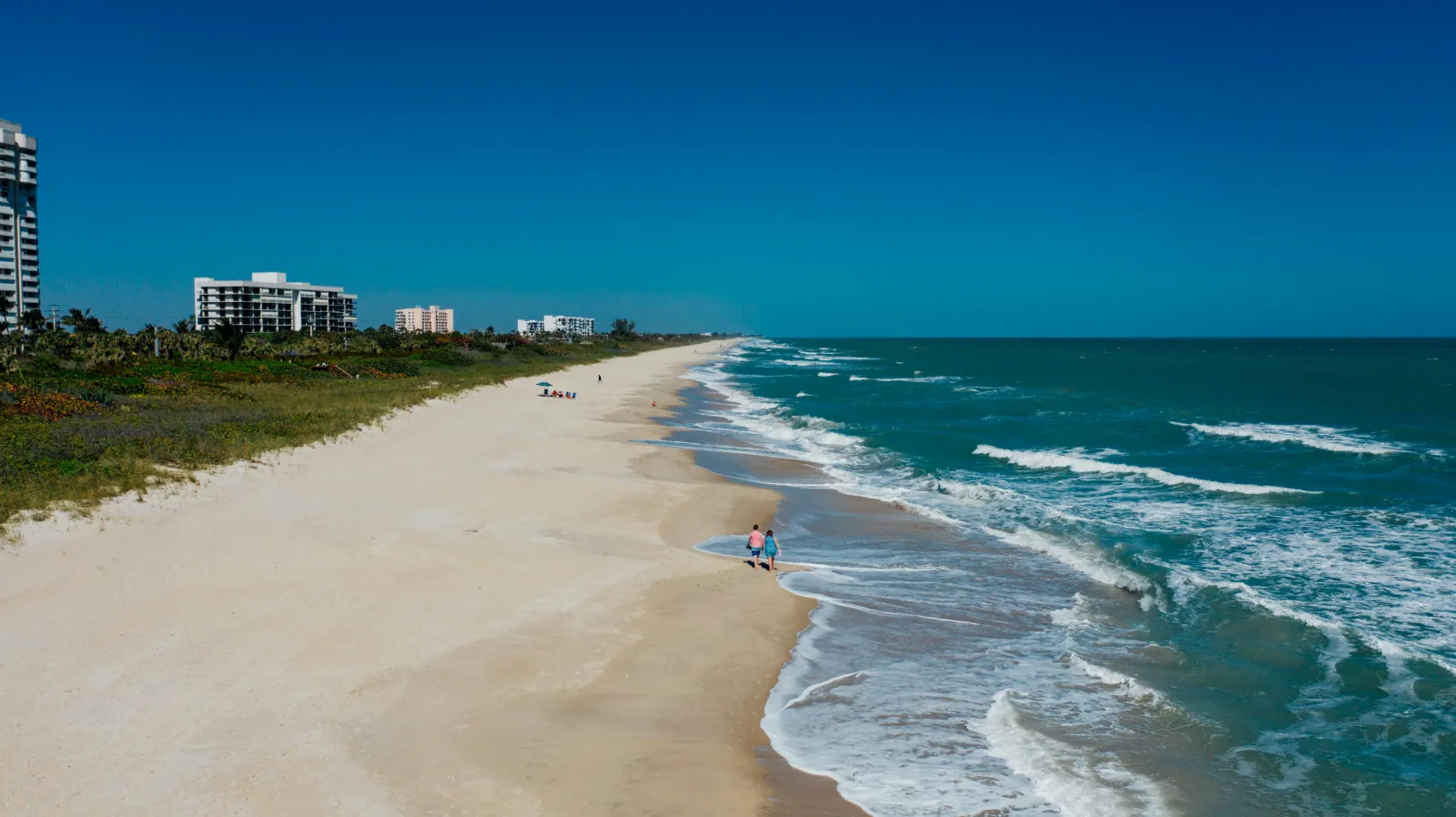
Brevard County is a county located in the U.S. state of Florida, along the coast of the Atlantic Ocean. As of 2007

U.S. Census Bureau estimates, the population is 536,521 making it the 10th most populous county in the state.

Influenced by the presence of the John F. Kennedy Space Center, the Brevard County Region is also known as the Space Coast. As such it was designated with the area code 321 as in 3-2-1 liftoff.


The official county seat has been located in Titusville since 1894, although most of the county's administration is performed from Viera. Brevard County has more than one county courthouse and sheriff's office because of its elongated north-south county lines. Hence, government services are not centralized in one location, as they are in many American counties.


HISTORY

The first Paleo-Indian people arrived in the area near Brevard county between 12,000 and 10,000 years ago. The Paleo-Indians were semi-nomadic people who lived in smaller groups. At the time the coast of Florida was about 100 miles (160 km) wider than nowand the Indian River was simply a lower point on dry land.

After a few thousand years, perhaps by around 3000 B.C. peninsular Florida resembled the land of today; in shape, climate, fauna, and flora. These people were primarily fishermen, as opposed to the hunting and gathering way of life which characterized the Paleo-Indians. It is believed that these were the ancestors of the Native Americans who would come in contact with the Europeans when they arrived. When Ponce De Leon arrived at the shores near Melbourne Beach in 1513. Heavy mosquito infestation and the threat of Indian attacks kept the area from having any permanent white settlements. The Spanish quickly left the area, but left a deadly reminder of their visit: European diseases. Within 200 years, almost the entire pre-Columbian population of Florida had died out. Creek Indians from the north quickly swept down from Georgia and the Carolinas to fill the void. These Indians became known as the Seminole. Their activity in Brevard County was intermittent and usually not permanent.

Throughout the 18th century, the great European powers Spain, Great Britainand France vied for power in Florida.

In 1837, Fort Ann was established on the eastern shore of the Indian River on a narrow strip of land on Merritt Island. In 1845, Florida became the 27th state of the Union. How and when Brevard County was founded and its history in the 19th century is much more complicated. During the 19th century, the state of Florida was constantly changing the names and borders of counties. Gradually, the borders of Brevard County were shifted northward while the county got "pinched" eastward.

By the 1880s, the cities along the Indian River included Melbourne, Eau Gallie, Titusville, Rockledge, and Cocoa. Unlike cities further inland in Florida, these cities did not have to rely as heavily on roads. The primary way of trans-versing the county was by water. In 1877 commercial steamboat transportation became a reality as the steamboat Pioneer was brought to the area.

The first real boom to the area occurred with the extension of Henry Flagler's Florida East Coast Rail roadinto the area. The railroad reached Titusville in 1886 and Melbourne in 1894. With the railroad came increased settlement and the first tourists.

20th century to present

The advent of the automobile age brought even more growth to Brevard County as resorts and hotels popped up all around the county. As the automobile became increasingly important as a means of transportation, roads connecting Brevard County to the rest of Florida and ultimately the rest of the nation were built.

 The first major land boom began in the 1920s with the end of World War I. People flooded into the state of Florida as land prices soared, only to bust as the Great Depression temporarily stopped growth in Florida. Before the start of World War II, the largest industries in Brevard were commercial fishing, citrus, and tourism.

In 1940, the Naval Air Station Banana River (now Patrick Air Force Base) was built. This began a new era in the development of Brevard County. Later, in the late 50s, the Long Range Proving Ground was opened. This later became the Kennedy Space Center. This changed the entire complexion of the county; where Brevard had once been considered a "backwoods" area of Florida, it instantly became the launching pad into outer space. What had once been a primarily low-tech farmer/fisherman economy was transformed into a high-tech engineering and computer economy.

As a very long, but not very wide county, there had been many complaints from people in the southern, more populous side of the county about being so distant from the county seat. A trip to conduct county business in Titusville was 50 miles (80 km) from the most populous city in the county, Palm Bay. There was talk of secession on the southern end of the county, and the county decided to build a new county administration complex at Viera near the geographical center of the county.

Located half-way between Jacksonville, Florida and Miami, Brevard County is an extra-long county, extending over 70 miles (110 km) from north to south, but only a handful of miles inland from the seacoast at any point. In marshes in the western part of this county is the source of the St. Johns River.

The Atlantic Intracoastal Waterway along the eastern edge of Brevard County is the major waterway route in Brevard County. It includes the Indian River. Additional waterways include Lake Washington, Lake Poinsett, Lake Winder, Sawgrass Lake, St. Johns River, and the Banana River.

Brevard County is the sole county in the Palm Bay – Melbourne – Titusville, Florida Metropolitan Statistical Area

There are 16 municipalities. The largest, by population is Palm Bay, the smallest Melbourne Village. Brevard county commissioners are elected by the public to establish ordinances and policies for the county. The Commission appoints a County Manager, who executes the will of the Commission. The county employed about 2,900 workers in 2009. A centrally located County Government Center in Viera houses the various county government branches, including Housing and Human Services, Juvenile Justice, Public Safety, Public Works and Solid Waste Management. County and school board meetings are televised, and the public is present for all city and town council meetings.

The Brevard economy has been driven by Trade, Transportation and Utilities (18%), Professional and Business Services (17%), Total government (15%), Education and Health (14%), Manufacturing (12%), Leisure and hospitality (10%), Construction (6%), Financial (4%). Kennedy Space Center (KSC) is the largest employer in the county with 15,000 contractors and civil servants. Port Canaveral is the world's busiest cruise port. It is served by seven cruise lines. They have six major cruise terminals. Military installations in Brevard County include Patrick Air Force Base, near Satellite Beach, Cape Canaveral Air Force Station (CCAFS), adjacent to the Kennedy Space Center, and the U.S. Air Force Malabar Test Facility on Minton Road in suburban Palm Bay. In 2009, they employed about 2,000 civilian federal workers

In 2008, tourists spent $2.89 billion in the county. 1.6 million people visited the Space Center Visitor Complex in 2008. Tourism, measured by the tourist tax, reached a peak in March 2007.

In 2009, there were 2.4 million overnight visitors in the county. There were 1.2 million day visitors.


LOCAL LINKS:

National Register of Historic Places listings in Brevard County, Florida

NASA KSC home page


DiscoverBrevard.com

Brevardzoo.org

Brevardschools.org

www.brevardcounty.us


CITIES AND TOWNS: Incorporated


Unincorporated